
For a long time, influencer marketing was a guessing game. Brands sent out free products, paid big fees to creators, and cheered for likes and comments. But when the boss asked, "How much money did we actually make back?", the answers were fuzzy. "Brand awareness," people would say.
Today, "brand awareness" isn't enough. You need real numbers. As you spend more on creators, you need proof that your investment is paying off. Measuring Return on Investment (ROI) can feel tricky, but it's totally doable. This guide shows you exactly how to track sales, prove your campaign worked, and get the most out of every dollar you spend.
The ROI Measurement Challenge
Why is it so hard to track influencer marketing? Think about a normal Facebook ad: someone clicks it, buys a shirt, and the tracking system easily connects the dot from ad to sale. Influencer marketing isn't that simple.
Imagine a customer watches a YouTube video on their TV about a new backpack. Two days later, they remember the backpack, search for it on Google from their phone, and buy it. The tracking system thinks this sale came from a Google search, entirely missing that the YouTuber started it all!
67%
of brands say measuring ROI is their biggest hurdle in influencer marketing.
To fix this, you have to look at the big picture. One single tool won't show you everything. You need a mix of tracking methods to catch all the ways creators drive sales.
A Framework for Measuring ROI
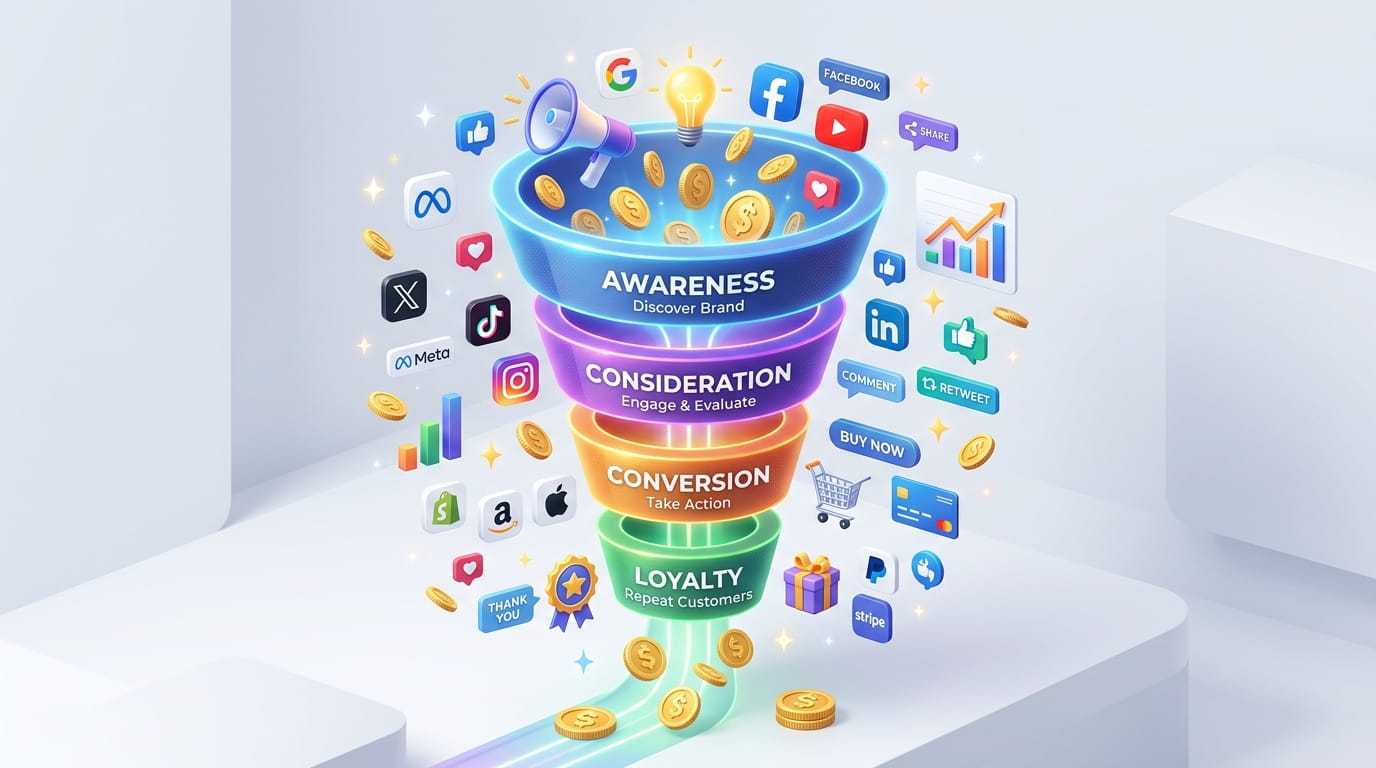
Before paying a creator, you must decide exactly what winning looks like. Match your campaign goal with a number you can track.
Are you just trying to introduce a brand new product to the world? That's an awareness goal. Or are you trying to get direct, immediate sales? That's a conversion goal. Your goal changes the math.
Example: If your goal is to sell 500 pairs of shoes right now, you care about the Cost Per Sale. But if your goal is just to make sure 1 million teenagers know your new brand exists, you shouldn't call the campaign a failure just because it didn't get 500 sales on day one. Measure what matters.
Tracking Methods That Work
Don't rely on random website traffic bumps. Set up these proven tracking tools before the creator posts anything.
1. Custom Promo Codes
Promo codes are amazing because they work anywhere-podcasts, TikTok videos, or Instagram posts. Give a creator a unique code like JAKE20. When a customer uses that code at checkout, you instantly know Jake sent them, even if they watched the video on an iPad and bought on a laptop.
2. Tracking Links (UTM Parameters)
If a creator can post a link (like in a YouTube description or Instagram Story), use a special tracking link called a UTM link. This invisible tag tells Google Analytics exactly which post sent the visitor. Always give each creator their own unique link!
3. Custom Landing Pages
Instead of sending people to your messy home page, send them to a special welcome page. Example: "Welcome followers of Sarah! Here's the 15% off deal she talked about." It feels personal to the customer and gives you perfectly clean data on how many people Sarah sent over.
💡 Pro Tip
Add a "How did you hear about us?" survey right after people buy something. You'll be shocked how many people type in a creator's name even if they didn't use a tracking link!
Automate Your Campaign Tracking
CollabOP provides built-in pixel tracking, automated UTM generation, and real-time dashboard analytics for all your creator partnerships.
Key Metrics Beyond Vanity Numbers
Likes and followers are nice to look at, but they don't pay the bills. Look at these money metrics instead:
- Cost Per Click (CPC): How much you paid divided by how many people clicked the link. Tells you if the creator is actually getting people to leave the app and visit your site.
- Cost Per Acquisition (CPA): Your total spend divided by the number of sales. Example: Spent $1,000 and got 100 sales? Your CPA is $10.
- Return on Ad Spend (ROAS): The money you made divided by the money you spent. Example: A ROAS of 3.0 means for every $1 you gave a creator, you made $3 back.
Attribution Models for Influencer Marketing
Attribution is just a fancy word for "who gets the credit for the sale." Picking the right rule changes everything.
Last-Click Attribution: Gives 100% of the credit to the very last thing the person clicked before buying. This hurts creators, because people rarely buy the exact second they see an Instagram post.
First-Click Attribution: Gives 100% of the credit to the first thing the person clicked. This rewards creators fairly for helping the customer discover your brand in the first place.
Multi-Touch Attribution: The holy grail. It splits the credit up. Example: It gives 40% credit to the YouTuber who showed the product, 30% to the Google Search they did later, and 30% to the final retargeting ad they clicked to buy.
Calculating True ROI
Here is the simple math to find your true ROI percentage:
The Formula: ((Total Money Made - Total Costs) / Total Costs) x 100
Example: Let's say you pay a creator $4,000 and give them $1,000 worth of free product. Your Total Cost is $5,000.
The creator's promo code brings in $12,000 in direct sales. You also notice a strange $3,000 jump in normal website sales that same week (the "halo effect"). Your Total Money Made is $15,000.
(($15,000 - $5,000) / $5,000) x 100 = 200% ROI! You doubled your money.
Optimizing Campaigns for Better ROI
Tracking data is pointless if you don't use it to get smarter. Think of your first few creator deals as paid experiments.
When you find a winner, double down! If a smaller creator with 30,000 followers gets you cheaper sales than a massive celebrity with 1 million followers, keep hiring the smaller creator.
Example: Take the creator's best-performing TikTok video and turn it into a paid ad. Sometimes an okay organic video turns into a wildly profitable ad because it looks like normal, authentic content instead of a slick commercial.
Putting It All Together
Let's look at a fake brand called "Crunchy Snacks." They spent $20,000 paying 10 different creators on TikTok. At first glance, the promo codes only brought in $18,000. It looked like they lost money.
But then they looked closer. During that exact two-week campaign, their normal website traffic spiked, bringing in an extra $10,000 in surprise sales. Then, they reused the 3 funniest creator videos as paid Instagram ads, which lowered their usual ad costs by 30%.
When they added up the promo codes, the surprise website traffic, and the cheaper ad costs, the campaign was a massive home run.
Stop guessing if your creator campaigns are working. By using clear goals, tracking links, and promo codes, you can prove exactly how much money influencer marketing is making your brand.
Scale Your ROI with Data-Backed Creators
Stop guessing. Discover, manage, and measure your entire influencer marketing program with CollabOP's enterprise-grade platform.