
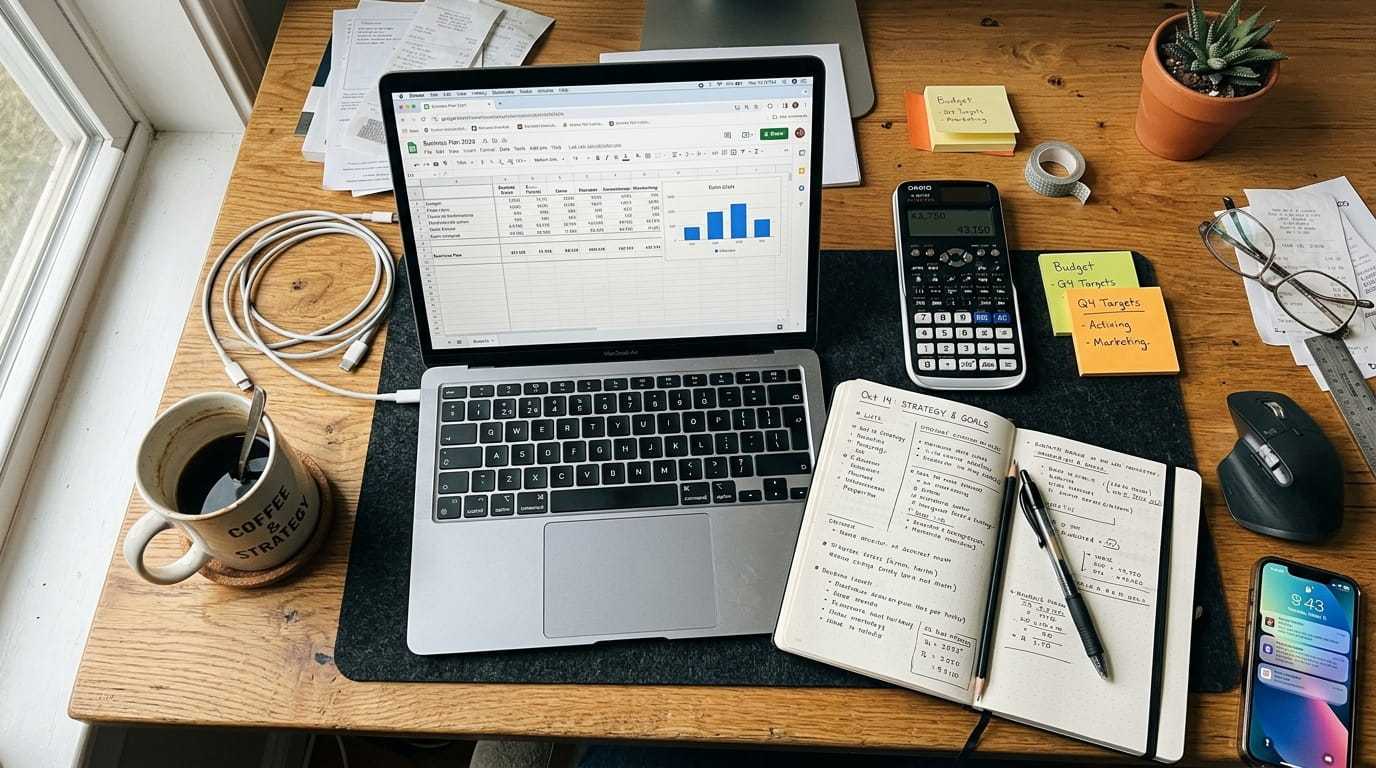
Have you ever stared at an email from a brand, completely frozen because they asked for your rates? You're not alone. Figuring out how much to charge for brand collaborations is hard. Ask for too much, and they might ghost you. Ask for too little, and you end up working for pennies. This is one of the biggest hurdles when turning your hobby into a real business.
The truth is, most creators guess their prices and severely undercharge. You might ask a friend or check an old forum post. But pricing is a science! Your rate should reflect your reach, video quality, and the loyal audience you've built. For example, a tech creator with 10,000 highly engaged followers can often charge more than a general comedy page with 100,000 followers.
78%
of creators report feeling anxious when setting prices for the first time.
This guide will take the emotion out of pricing. We'll break down simple formulas, industry standards, and hidden factors that decide your rate card. By the end, you'll have a solid plan to price your work, negotiate like a pro, and grow your business.
Why Every Creator Needs a Rate Card
A rate card is your menu. It's a clean, professional document that lists your services and base prices. If you want big brands to take you seriously, you need one.
First, it shows you mean business. When a brand asks for your rates and you reply with a sharp PDF or CollabOP link, you look like a pro. It tells them, "I do this all the time, and my prices are set."
Second, it gives you a starting point for negotiations. Imagine a brand has a $500 budget. If your rate card says a dedicated TikTok is $1,200, you don't have to defend your price. You can simply say: "My standard rate is $1,200, but for your $500 budget, I can do a 3-part Instagram Story with a swipe-up link."
Finally, making a rate card forces you to look at your own numbers. You have to check your average views, engagement, and the time it takes to film. This helps you realize exactly what your time is really worth.
💡 Pro Tip
Never send a static rate card without asking for the project scope first. Always frame it as: "Here is my standard rate card for base pricing. I'd love to hear more about your specific needs, usage rights, and timeline so I can give you a custom quote."
Pricing Models: Flat Fee vs Performance
Before we do the math, let's look at how deals are structured. There isn't just one way to charge. Pick the model that fits your style.
1. The Flat Fee Model
You charge a set price for a piece of content (like $1,500 for one TikTok). You get paid no matter how the video performs.
Pros: Safe, guaranteed income. You know exactly what you are getting paid.
Cons: If your video goes viral and makes the brand a million dollars, you don't get a bonus.
2. CPM (Cost Per Mille) Pricing
Your rate is based on views. "Mille" means thousand, so CPM is your cost per 1,000 views. If your CPM is $25 and you get 100,000 views, you make $2,500.
Pros: Easy for brands to understand because it's how traditional ads work.
Cons: If the algorithm has a bad day and your video flops, you make less money.
Ready to showcase your value?
Join CollabOP to create a professional media kit with verified analytics and secure better brand deals.
3. Performance or Affiliate Model (CPA)
You get paid based on results. This could be a 15% cut of sales from your promo code, or a flat $10 for every app download.
Pros: No limit on how much you can earn. If your fans love to buy what you recommend, you can make a fortune.
Cons: High risk. If the brand's website is confusing and no one buys, you work for free.
4. The Hybrid Model (The Sweet Spot)
The smartest creators use a mix. You charge a base flat fee (to cover your time and basic views), plus a commission on sales.Example: A $1,000 base fee + 10% of all sales. This covers your hard work while rewarding you if the video goes viral.
Data-Backed Rate Formulas
Now, let's do the math. How do you find your base rate? Use these formulas as your starting point-never your ceiling.
The CPM Formula
The best way to calculate your rate is using your average views (not followers) and a standard CPM. Here's the math:
(Average Views / 1000) × CPM = Your Base Rate
First, find your average views. Look at your last 10 to 15 videos. Drop the huge viral hits and the total flops, then average the rest.
What should your CPM be?
- Instagram Reels / TikTok: $15 to $35 CPM
- YouTube Ad Shoutout: $20 to $40 CPM
- YouTube Dedicated Video: $50 to $100+ CPM
Example: Let's say you average 80,000 views on TikTok. You do lifestyle videos, so you pick a $25 CPM.
(80,000 / 1000) = 80.
80 × $25 = $2,000 Base Rate.
The 1% Rule (The Old Way)
People used to say you should charge $100 for every 10,000 followers. So, 100,000 followers meant a $1,000 rate.
Stop doing this! Followers are just a vanity number now. A creator with 50,000 fans who gets 40,000 views per video is way more valuable than someone with 500,000 fans who only gets 5,000 views. Always price based on actual attention and views.
3x
Creators with a highly specific niche can charge up to 3x the standard CPM.
Factors That Affect Your Rates
The formula is just the start. Real brand deals have "strings attached." Every extra string means you can increase your price.
1. Your Niche and Audience
Not all audiences spend the same. A finance creator talking about credit cards can charge way more than a meme page. Why? Because the finance fans are older and ready to spend money. If you are in tech, finance, or real estate, you can double or triple the normal rates.
2. Usage Rights (Don't Skip This!)
When a brand pays you, they are paying to reach your fans on your channel. If they want to download your video and run it as an ad on their account, they need to buy Usage Rights.
Never give this away for free! A good rule is to charge an extra 20% to 50% of your base rate for 30 days of digital ad usage.
3. Whitelisting (Spark Ads)
This is when a brand pays TikTok or Instagram to boost your post directly from your account. You should charge a fee for this access. Many creators add a flat fee of $300-$500 per month for this.
4. Exclusivity
If Nike sponsors you, they might say you can't wear Adidas in your videos for 60 days. You are legally blocked from taking checks from rivals. You must charge for this lost money! Add 10% to 20% to your fee for every week you are exclusive.
5. Rush Fees
If a brand wants a video filmed and posted in 3 days, you have to drop everything else. Add a 50% rush fee for anything under a week, and a 100% rush fee for anything under 48 hours.
Rates by Platform and Format
Some videos take 10 minutes to film, others take 10 hours. Your prices should match the effort.
- Instagram Stories: These are usually the cheapest because they disappear in 24 hours and require no editing. Charge about 20-30% of your normal Reel rate for a 3-part Story.
- TikTok & Instagram Reels: Short, vertical videos are the most popular right now. Use the CPM formula we talked about above.
- YouTube Ad (60-90 seconds): A quick shoutout in the middle of a normal video. Because YouTube videos get searched for years, they are highly valuable.
- YouTube Dedicated Video: A 10-minute video all about the brand. This takes huge effort and audience trust. Charge 3x to 5x your normal ad rate.
💡 Pro Tip
Bundle your services. Instead of selling one TikTok for $1,000, pitch a "Brand Awareness Package: 2 TikToks, 1 IG Reel, and a 3-frame Story series for $2,800." Brands love packages!
When and How to Raise Your Rates
Your rate card should grow as you grow. Most creators wait way too long to raise their prices. You should raise your rates if:
- Your views are up: If your average views jump by 20% for a few months.
- You are fully booked: If you have more brands emailing you than you have time for, you are too cheap!
- You drive huge sales: If your last video made a brand $50,000, you aren't just selling "views" anymore. You are driving real revenue. Charge more!
- It's been a year: Just like a normal job, give yourself a raise. Go up by at least 10-15% every year.
When you tell old brand partners about the change, be nice but firm. Send an email a month ahead of time: "Hi Team! I've loved working with you. Just a heads up, my channel has grown by 40%, so my standard package will be $X starting next month. To say thanks for our partnership, I'd love to lock in our old rate if we book a campaign before Friday!"
Stop guessing. Start earning.
CollabOP analyzes your account metrics to suggest optimized rate cards automatically.
Presenting Your Rates to Brands
How you send your rates is just as important as the numbers. Don't just reply to an email with "I charge $1,000." That looks amateur.
Instead, put your rates inside a Media Kit. This is a PDF or website that shows who you are, who your fans are, and how well your past videos did. Prove your value first, then show the price tag.
Keep the pricing page crystal clear. Use bullet points to show exactly what they get. Be super obvious about extra costs (like "+$500 to run as an ad for 30 days"). Clear rules prevent awkward fights later.
Stop guessing and start treating your content like a real business. Use the math, stand your ground, and don't apologize for knowing your worth!